
Learning French as a second language when you’re an adult presents unique challenges. Perhaps you’ve been successful in a field that required memorization of an enormous amount of material. You can memorize long lists of French vocabulary words and verb conjugations. But when you try to speak French with someone, you’re unable to retrieve those words. It’s not just French. If you’re over 45, you know that: when suddenly you can’t remember why you entered a room or the name of a neighbor. A friend aptly characterized mid-life memory deficits when he said, “You just don’t have same day delivery anymore.” It’s true: if you pause and relax, the word eventually floats onto your tongue. It might be the next day, but eventually it arrives.
Your French reading comprehension may be far superior to your elementary listening abilities and speech fluency. Some days trying to chat in French causes actual brain pain, as if one can feel neurons stretching and straining to make new connections.
Location…Location…Location
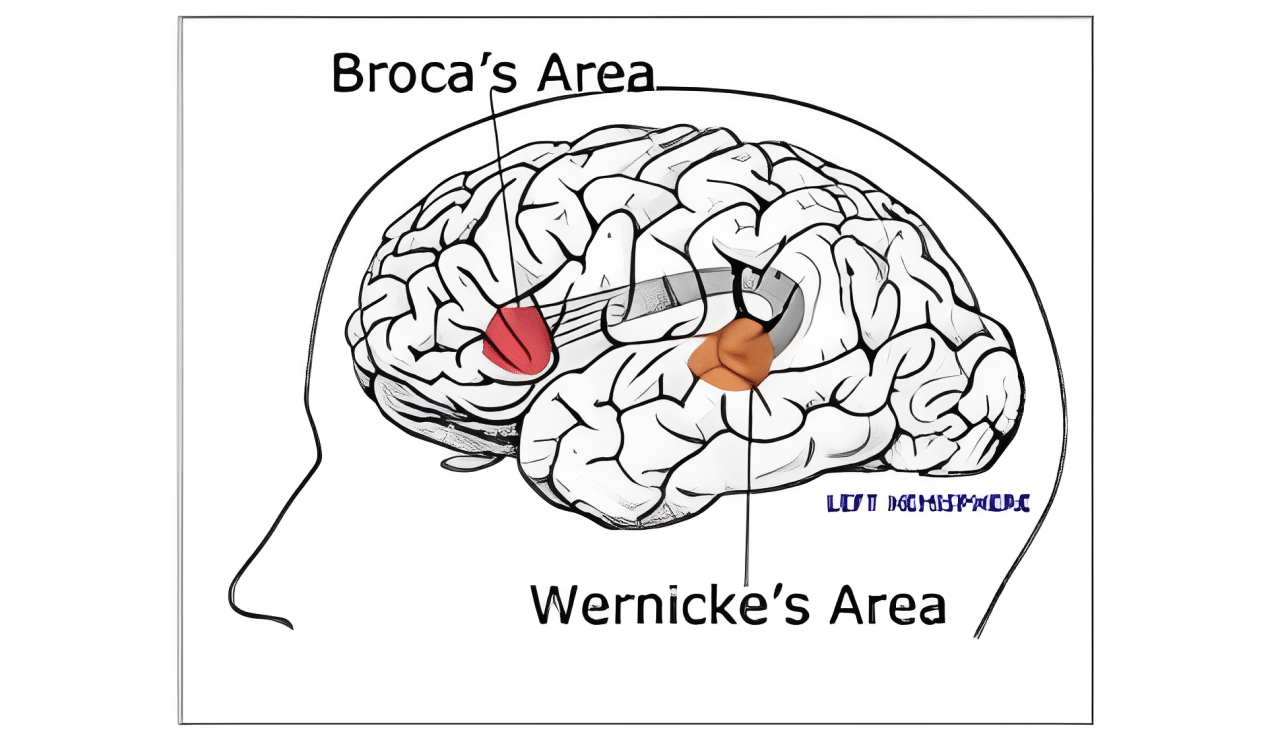
Language is all about the left brain. There is a special area for speech comprehension: Wernicke’s Area. If you suffer a stroke and damage Wernicke’s, you can still form words, clear and fluent words, long strings of words, but they don’t make any sense. That’s why they call Wernicke speech ‘cocktail hour conversation’ or ‘word salad’. It’s a jabberwocky jumble of meaningless words. You don’t comprehend speech and what you produce is not true language.
It’s Broca’s Area that gives grief in second language learning. Broca grabs the right word and puts it in the right place to create a coherent sentence. If you damage Broca’s Area, you understand language, know what you want to say, but you can’t get it out your mouth. And if you do manage a few words, they are telegraphic, slow and labored, and often only a noun and verb without any use of tense. And wouldn’t you know it – it was named after a French doctor, Paul Broca.
The reason it’s harder to learn a second language as an adult is that you have to build a separate spot in Broca’s Area for it. When you learn another language as a child, you use the same region as your native tongue. No wonder it hurts; you’re building a French Annex in your brain.
Bilingual folks have beefed up speech centers. Yep, their brains are actually denser. The more fluent they are, the more grey matter they have in their speech areas. And the earlier they learn their second language, the denser the grey matter. The good news is that learning a second language helps ward off senile dementia. And you can wallow in the joy and beauty of that language.
Cynthia Tuttelman (aka "Tut") is a writer, family doctor and quilter who lives in Northern California and part-time each year in Paris, France. Follow along and explore the wonders of Paris.