
Marché d’Aligre in the 12th arrondissement grew up around the abbey of Saint-Antoine-des-Champs which dates back to the 12th century. Originally it was called the Petite Halle and leased to butchers until other vendors and hay merchants made inroads. A formal marché was created in 1781 and it sold a great deal of hay and straw for the horses of Paris. With the Revolution, the marché became property of the state. At the beginning of the nineteenth century, it was the second busiest market in Paris (after Les Halles).
There is an outdoor marché around Place d’Aligre. The Place and rue d’Aligre are crowded with stalls selling fruit and vegetables and flowers. The outdoor markets are run primarily by North Africans from Morocco, Tunesia and Algeria. Vendors call out “Un cadeau!” (a gift!) and “Un Kilo – un Euro!” (one kilo – one euro!) to the crowd and chat with each other in Arabic.
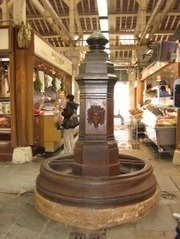
The covered marché, Beauvau, is a registered historical monument. There is an old fountain inside, used to wash down and clean up when the market closes. Inside you’ll find meat, poultry, fish, cheese and prepared products.
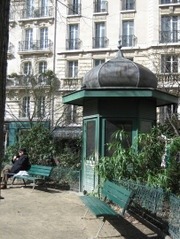
Walking to and from the marché on weekends, you pass a delightful little park, Square Trousseau, with a children’s playground, bandstand, ping-pong tables and benches to sit amidst the foliage. Patisseries and boulangeries are conveniently located on the street lining the square and it’s a lovely place to eat a croissant and watch the children playing.
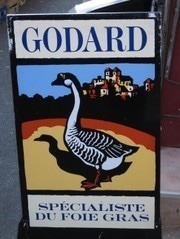
There is a flea market near the end of rue d’Aligre, operated mostly on weekends. Rue d’Aligre is also a street of traditional little shops with high end a high end cheese shop and a foi gras merchant.
Cynthia Tuttelman (aka "Tut") is a writer, family doctor and quilter who lives in Northern California and part-time each year in Paris, France. Follow along and explore the wonders of Paris.