Have you noticed any of these markers on Paris buildings?
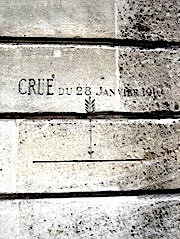
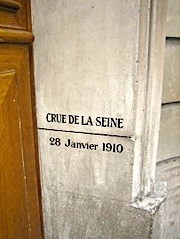
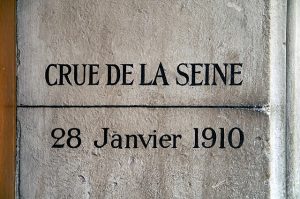
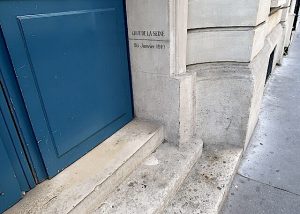
Une crue is a flood and these carvings and plaques found around Paris reference the Great Flood of the Seine River in 1910. Une inondation is another word for a flood or a deluge, but typically the events of January 1910 are referred to as la crue. That winter there was heavier than usual rainfall and tributeries filled the Seine until it rose more than 26 feet above normal. The river did not break over the banks of the Seine but flooded Paris through tunnels. sewers and drains. Water infiltrated buildings and flooded the streets.
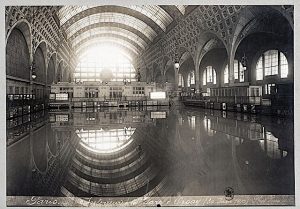
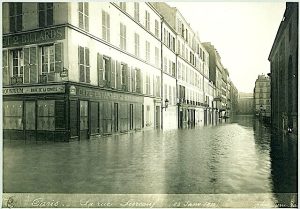
The Seine flowed through the Gare d’Orsay (now Musée d’Orsay) creating a two block long swimming pool that submerged the trains and engines.The unfinished Metro tunnels and stations were flooded. Basements of the Louvre (with stored artworks) were threatened. Traffic was eventually stopped on the nine bridges between Pont Neuf and Pont de Grenelle.
Paris was a very modern city at the turn of the 20th century. Six lines of the metro had opened by the beginning of 1910. Streetlights were gas illuminated and 60 to 70,000 Parisian homes had gas and electricity. The electrical system ran underground through the subway lines. A system of compressed air controlled 58,000 clocks and 4,000 elevators in Paris. Most buildings had sewer service and there was daily garbage pickup. So when all the clocks stopped simultaneously at ten minutes to eleven on Friday, January 21, 1910 because the station that powered them with compressed air was flooded, Parisians were surprised. An eyewitness account noted:
Crowds, it is true, had gathered on the embankments, admiring the headlong rush of the silent yellow river that carried with it logs and barrels, broken furniture, the carcasses of animals, and perhaps sometimes a corpse, all racing madly to the sea; they had watched cranes, great piles of stones, and the roofs of sheds emerge for a time from the flooded wharves and then vanish in the swirl of the rising water, while barges and pontoons, generally dissent from sight far below, rose gradually above the level of the streets, notably one great two-storied bathing barge, a vision of unsuspected hideousness, that threatened at any moment, triply moored as it was, to crash into the parapet.
…From visits to out-lying districts I retain a vague impression of thick black slime, abject shivering misery and great lakes of yellow water, with here and there the upper story of a house rising like an island from the desolate waste.
Police, fireman and soldiers were brought in to rescue and ferry stranded people about in boats and build rudimentary elevated walkways.
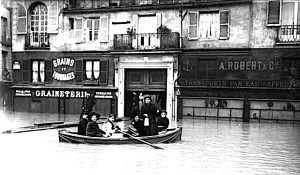
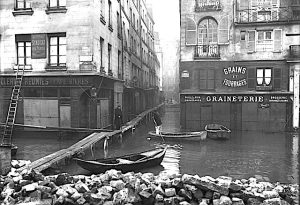
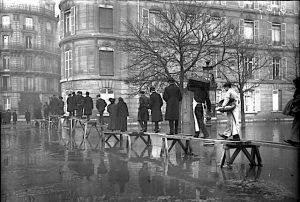
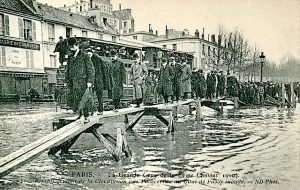
The waters stopped rising on January29 and pumps of all sizes and types were brought in to help drain Paris.
Today Parisians use an unofficial measure to assess the risk of flooding, the height of the river in reference to where it stands against the figure of the Zouave sculpture under the Pont de l’Alma. The Zouaves were light infantry troops in the French army.
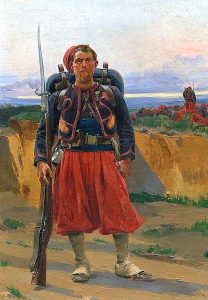
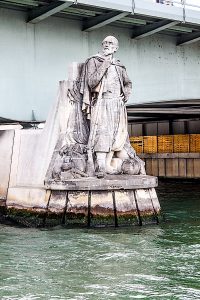
In 1910, the Seine rose to the height of the Zouave’s shoulders. Remember these events when you pass a ‘crue de le Seine’ building marker.
Cynthia Tuttelman (aka "Tut") is a writer, family doctor and quilter who lives in Northern California and part-time each year in Paris, France. Follow along and explore the wonders of Paris.